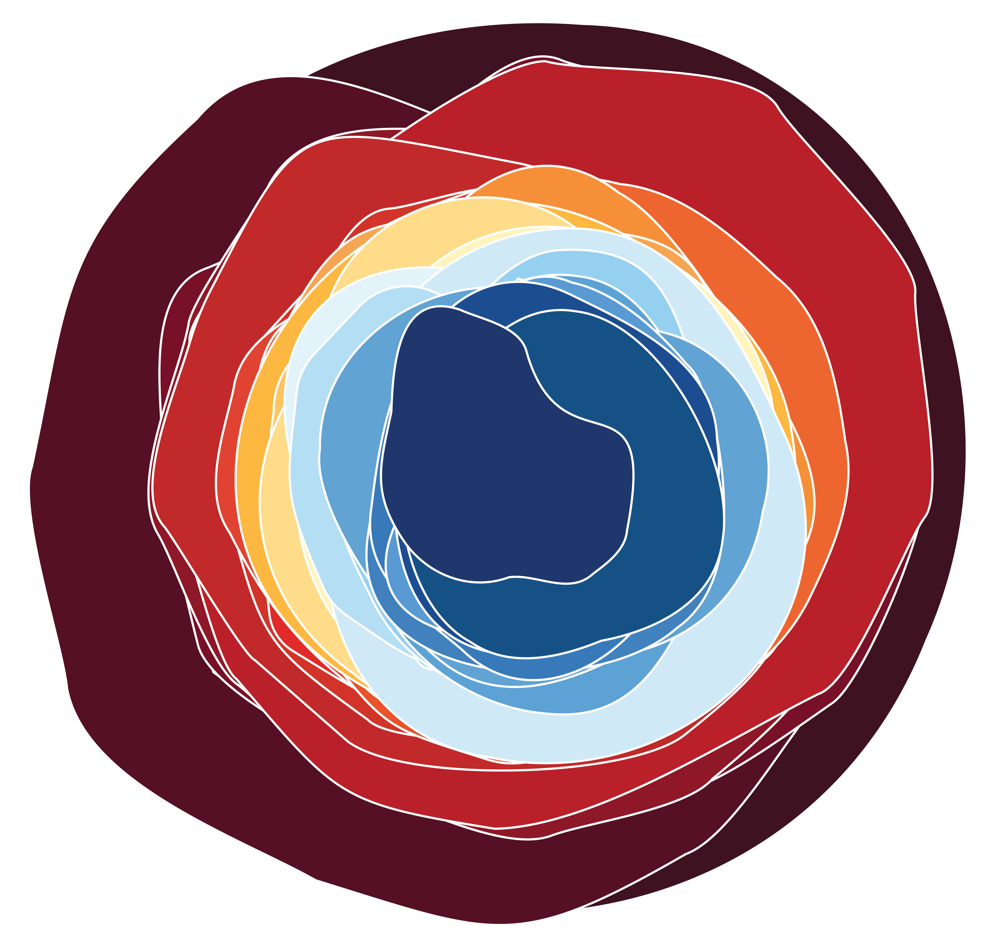
Climate adaptation presents an opportunity to reimagine futures, extending beyond dominant narratives of green utopias, doomsday scenarios, and technology-dominated futures. However, envisioning alternative futures remains a significant challenge, particularly when relying on text-based forms of communication alone.
This talk argues for the role of visualisation, specifically illustration, as a methodological and epistemic tool in climate adaptation research. Visual artefacts can stimulate imagination, evoke emotional engagement, and enable the articulation of tacit and experiential knowledge that is often inaccessible through conventional analytical approaches. In contexts marked by uncertainty, loss, and complex socio-environmental change, such capacities are essential.
The presentation showcases a curated set of 31 illustrations developed through a process of co-production, bridging art and science. The illustrations explore diverse interpretations of adaptation, for the particular case of cities, interrogating what adaptation is and is not, while opening space for plural and situated futures.
The talk further demonstrates how visuals can support collaborative visioning at the city scale and contribute to dismantling knowledge hierarchies by fostering inclusive dialogue among diverse stakeholders. Empirical insights are drawn from a global study on adaptation imaginaries, complemented by place-based engagements in Mérida (Mexico), Bogotá (Colombia), and Alghero (Italy).
Together, these insights illustrate how visual methods can function as both analytical and participatory tools, expanding the scope of data visualisation to include affective, imaginative, and co-created dimensions of knowledge production. This contribution positions illustration not merely as a representational device, but as a transformative practice for engaging with the complexities of climate adaptation in urban contexts.