Climate visualisation is often presented as something to observe, interpret, or decode — typically as static outputs shaped by expert tools and established visual conventions. But what if climate visualisation could also be something we actively co-create?
This talk explores an alternative approach in which natural language becomes an interface for generating and transforming climate visualisations through conversation. Combining distributed climate data sources, conversational AI, and generative art systems, the project enables people to collaboratively create interactive visual interpretations of climate data without requiring programming expertise. Scientific datasets such as temperature anomalies, atmospheric indicators, and climate projections are retrieved through distributed climate data tools and translated into generative visual systems built with creative coding technologies.
Through natural language interaction, users can prompt visualisations, iteratively transform them, and explore alternative representations in a mixed process of dialogue, interpretation, and creative experimentation.
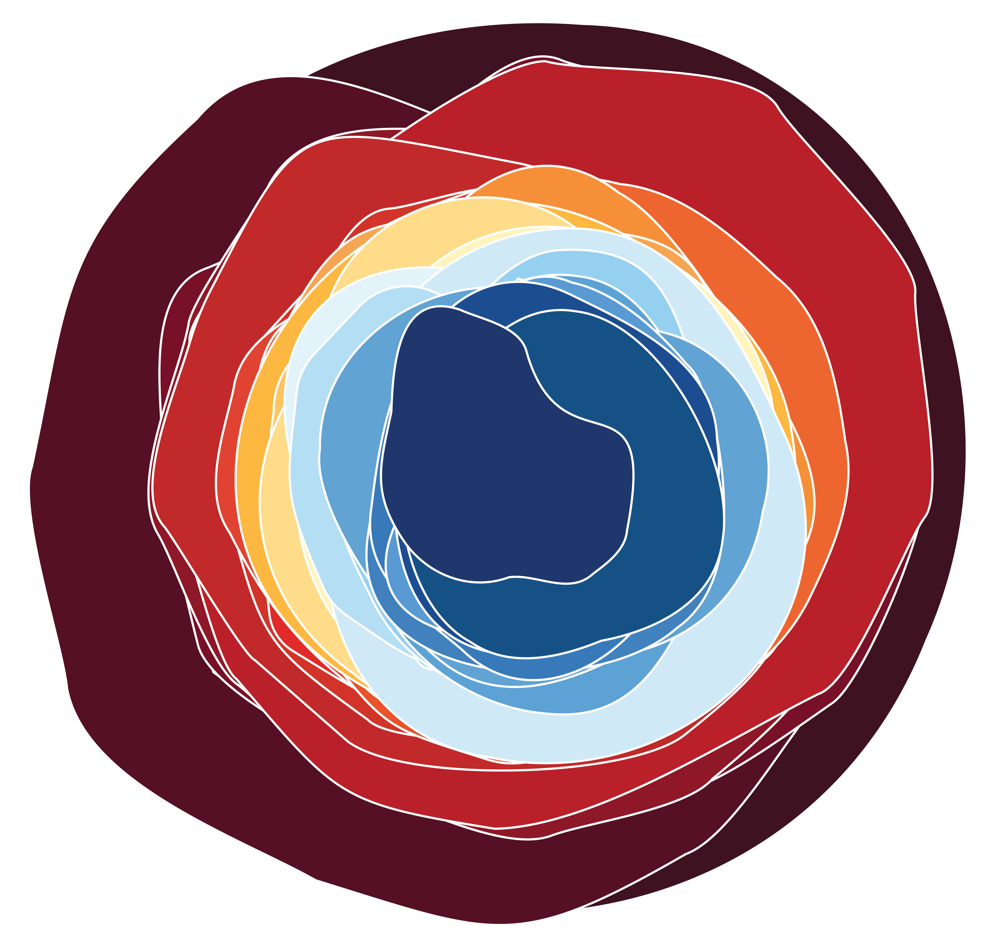
A temperature anomaly might become a moving particle field. Warming stripes might evolve into a living generative system. Sea-level projections might be explored as speculative visual futures.
Rather than treating climate visualisation as a fixed act of representation, this approach frames it as a dynamic and participatory process where scientific data, visual form, and human imagination interact.
Through live demonstrations, the talk explores how generative art and natural language interfaces can expand climate communication beyond static explanation toward more exploratory, expressive, and collaborative forms of climate storytelling. It proposes climate through conversation as a new space between scientific rigour, creative experimentation, and public engagement.